FICAT Foundation, formally established in 2000, but with a history as an association since 1996, it was initially established as a space for legal support and advice, as well as a training space for new lawyers and for citizens interested in defending a democratic and egalitarian society. Currently, this work is complemented by the search, together with other professionals in the social sciences, social entities, universities, and public administrations, for social, legal, and institutional action strategies that promote the defense of the rights of individuals and groups at risk or in situations of social exclusion.
Confederations and federations of social entities of Catalonia such as @confavc, @ecasacciosocial,@fundacioficat i @lafede_cat We launched a campaign to dismantle xenophobic rumors and hate speech fueling the #23J election campaign. #Això va de Drets Humans #De què tenim por?
With slogans such as “This is about Human Rights” or “What are we afraid of?”, media and local faces refute stereotypes about the effects or consequences of the arrival of migrants in Spain. Specifically, collaborations have been made with the world of acting, such as Laia Manzanares, Joana Vilapuig and Iñaki Mir; the world of journalism, such as Jordi Évole and Elidenda Colell; and the local movement – such as Júlia Portal and Rocío Laguna – and social movements, such as Francesc Mateu, director of the Forum of Local Ombudsman.
The campaign also provides data and claims the need to increase public investment by administrations in order to guarantee social rights and improve the quality of life of people, regardless of their nationality or origin.
FIGURES THAT DISASSEMBLE RUMORS
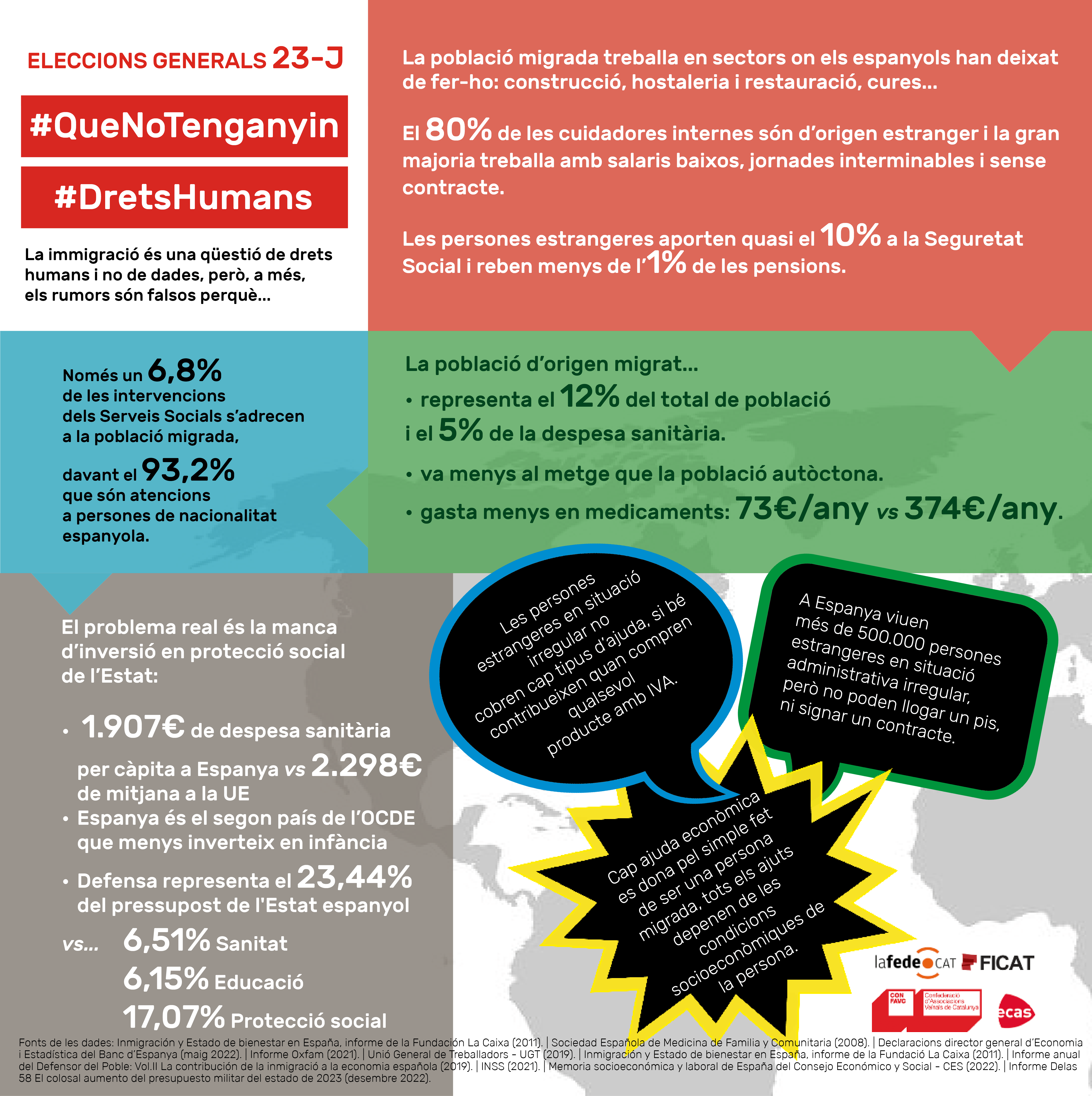
The campaign points to derogatory rumors about the migrant population and refutes them with figures from expert organizations and accredited sources that refute issues related to work, health or coexistence. At the same time, it articulates a positive story of the migration phenomenon and argues for the allocation of aid in terms of equity and social justice. For example:
ABOUT THE WORK
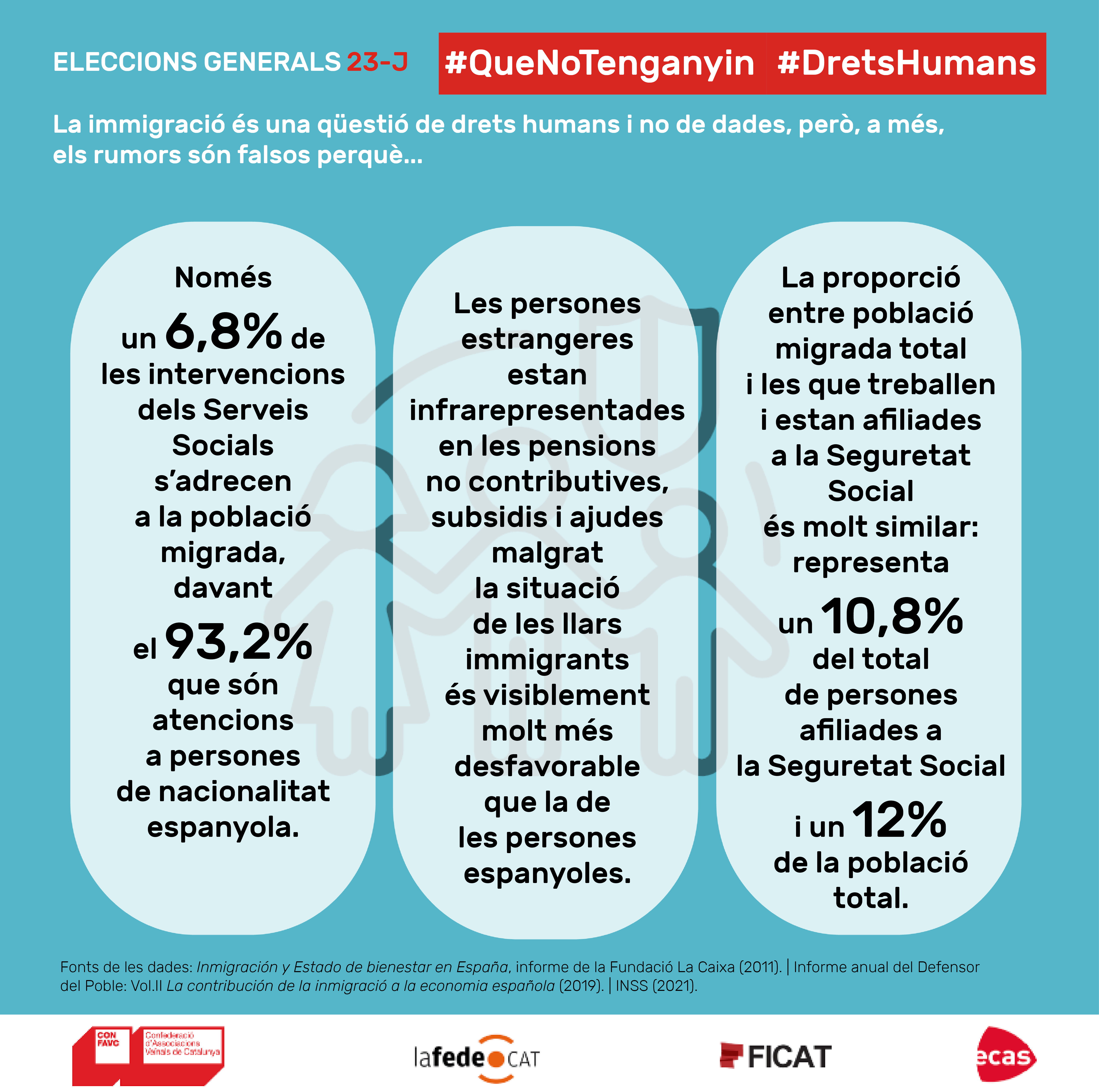
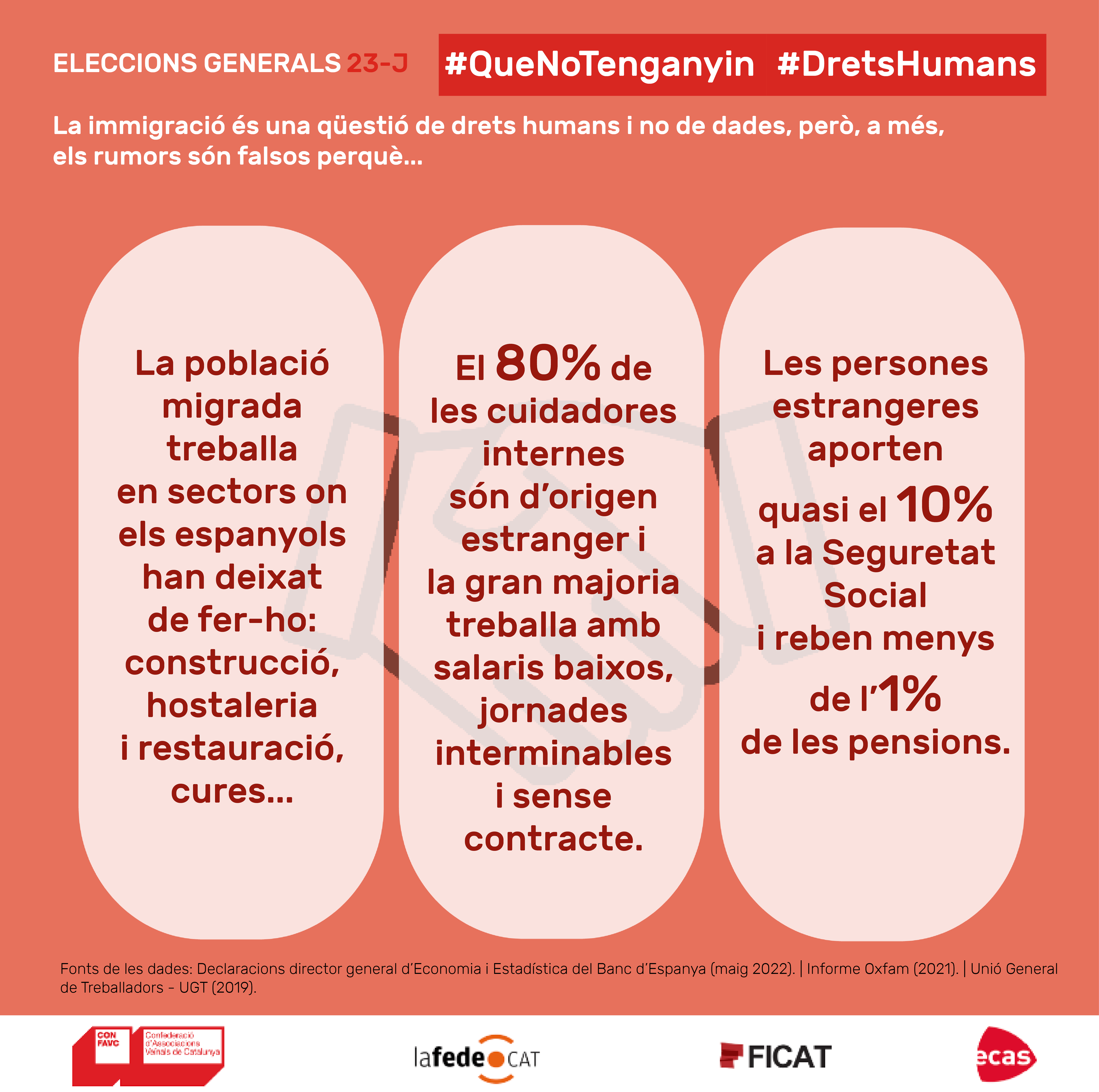
The proportion between the total migrant population and those who work and are affiliated with Social Security is very similar: they represent 10.8% of the total number of people affiliated with Social Security and 12% of the total population. Therefore, they contribute to the system and do so, moreover, in sectors where the native population has stopped doing so –hotels and restaurants, construction and, especially, in the field of care– and in very precarious conditions, with low wages and endless working hours. In fact, migrants contribute almost 10% to Social Security and receive less than 1% of pensions, according to the UGT union. (Figures from January 29, 2021 from Social Security,https://bit.ly/44N4EGlihttps://bit.ly/3DeJGVa).
ABOUT HEALTH
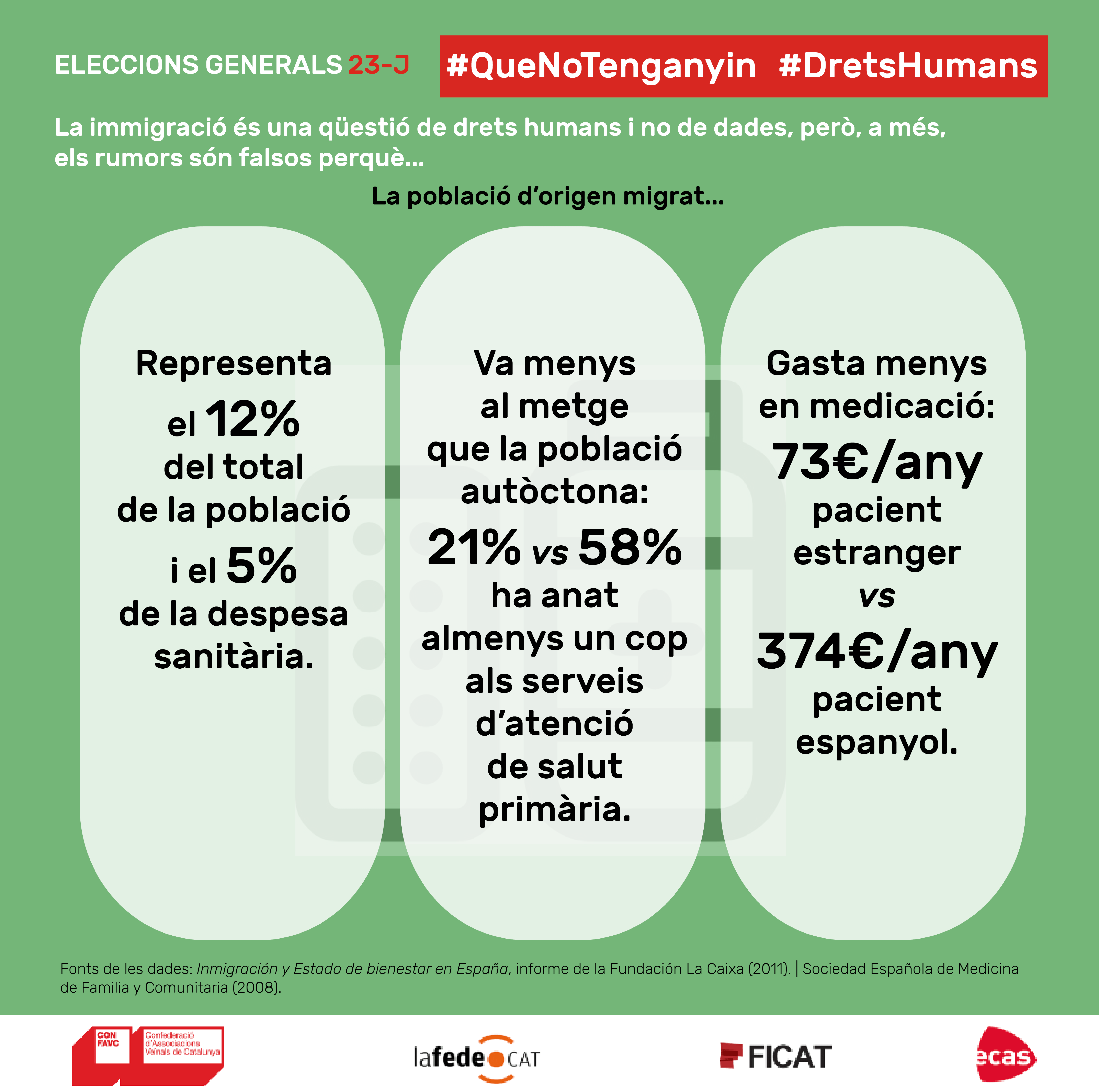
People of migrant origin: They represent 12% of the total population and only 5% of healthcare expenditure. They go to the doctor less often than the native population –21% have gone to primary healthcare services at least once compared to 58% of people with Spanish nationality–. They spend less on medicines: €73/year compared to €374/year of pharmaceutical costs for the native population. (Figures from the report Immigration and the State of Well-being in Spain, by the ‘la Caixa’ Foundation and the Spanish Society of Family and Community Medicine)
ON SOCIAL FOODSTOPPING
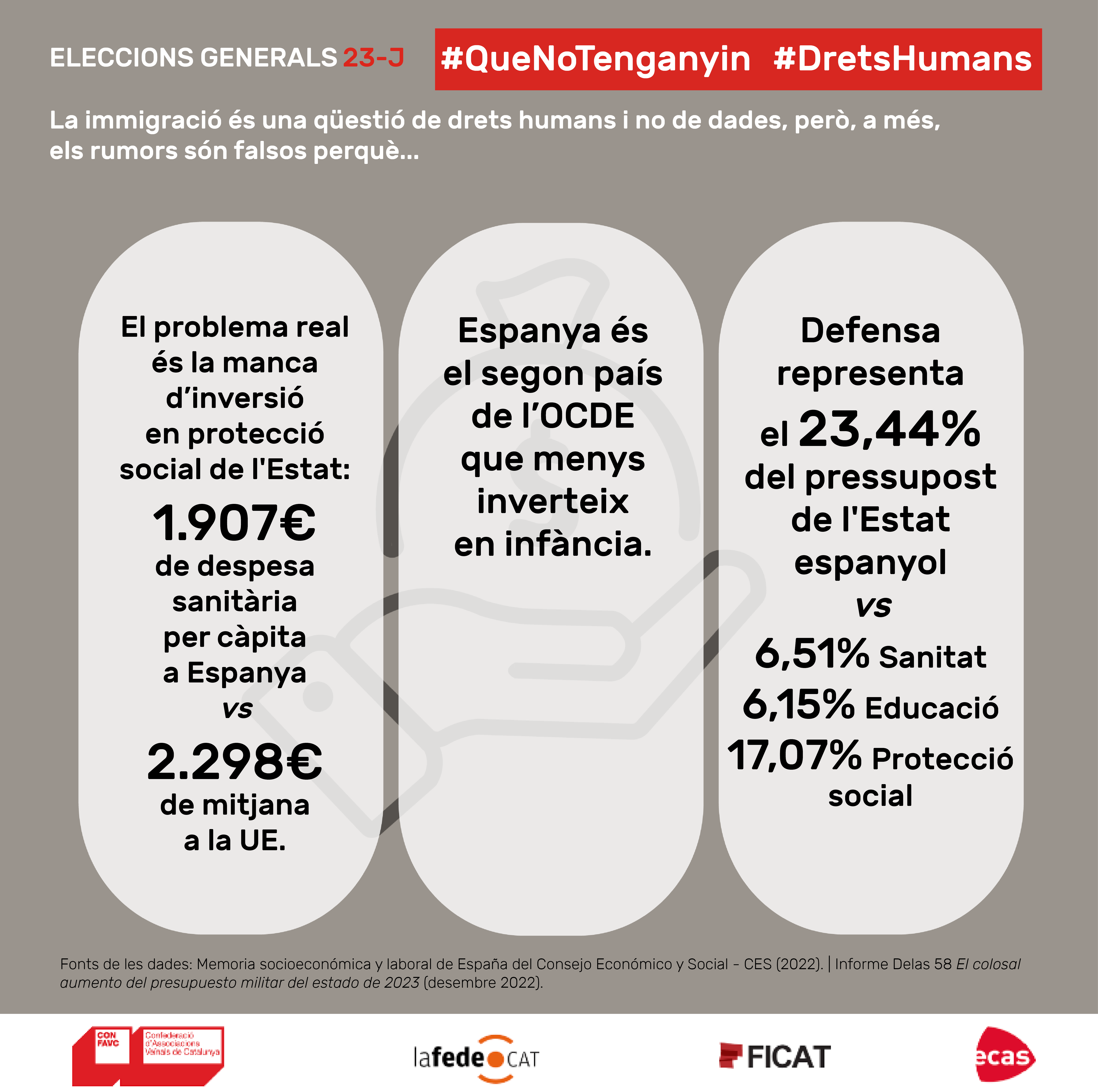
Only 6.8% of social services interventions are aimed at the migrant population, compared to 93.2% that are care for people of Spanish nationality. The Spanish state allocates only €1,907 per capita in healthcare spending, compared to €2,298 on average for EU countries. The chronic lack of investment in the social protection system as the major deficit that must be addressed to ensure a dignified life for everyone. These figures contrast with the 2022 defense budget, which represents 23.4% of the total compared to 6.5% of health items, 6.1% for education and 17% for social protection. (Figures from the report Immigration and State of Welfare in Spain, from the ‘la Caixa’ Foundation; from official data from the Ministry of Health and Report 50 from the Delàs Center)
REGISTRATION, A COMMON FRONT
The social entities that promote the “#QueNoTenganyin” campaign within the framework of the 23-J made a common front for the right to the registry in the past municipal elections. Together with other platforms such as the Forum of Local Ombudsman or the Coordinadora Obrim Fronteres, they denounced that many town halls do not comply with the law when it comes to facilitating the registry for all people living in Catalan municipalities. The registry acts as a gateway to other basic rights such as health, education and social care. With the current campaign focused on the migrant population to confront hate speech, the entities recall that in Spain more than 500,000 migrants live in an irregular administrative situation, in bureaucratic limbo due to the Immigration Law that excludes them from all social spending while contributing to society and the wealth of the country.
Participate in the 4th edition of our Anti-Racist Poster Contest!
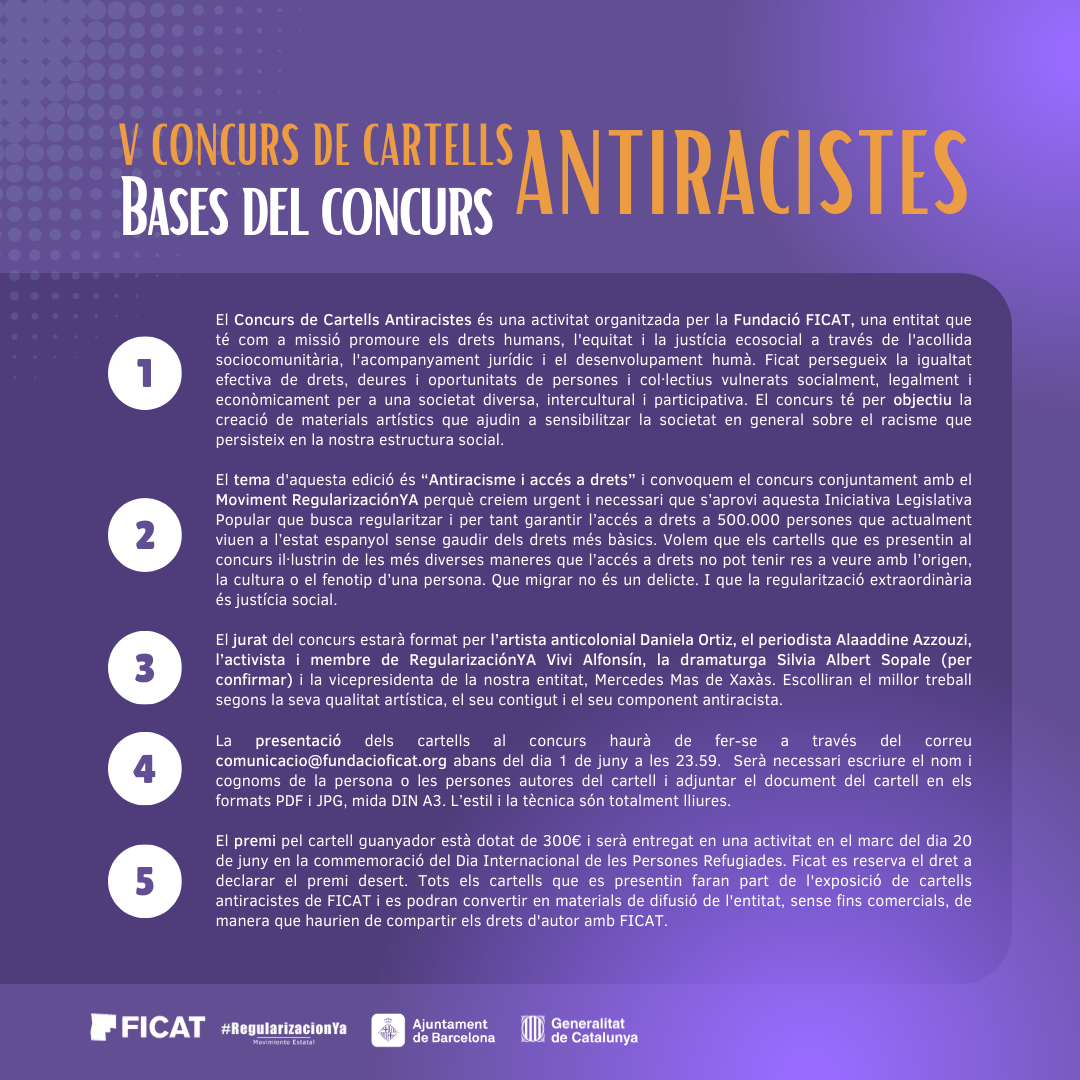
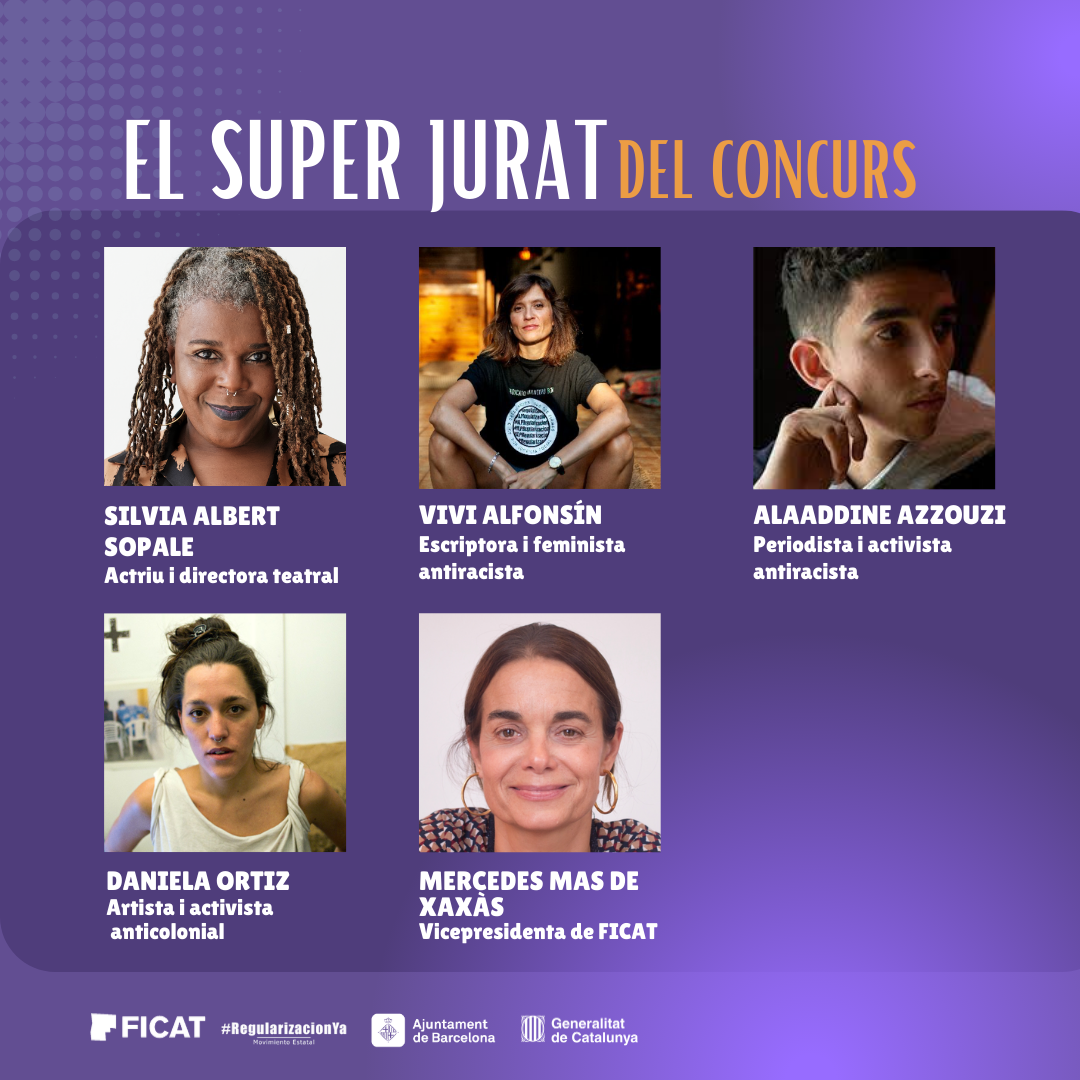
The Anti-Racist Poster Contest is an activity organized by the FICAT Foundation, an entity that seeks effective equality of rights, duties and opportunities for socially, legally and economically disadvantaged individuals and groups. The contest aims to create artistic materials that help raise awareness in society in general about the racism that persists in our social structure.
You can submit your proposal until June 1, see the rules: